|
|
|
|
Like many of you, perhaps, I've always been interested in not only the instruments of writing, but in those who use those instruments as tools of their trade -- professional writers. This page is devoted to a number of my customers who are novelists and non-fiction writers, and who share the love of fountain pens that most likely drew you to this website in the first place. I've found that many readers have a fascination with the tools and habits of those who actually earn their living through the creative process of imagination and writing (most of us harbor the conceit that we too could pen that next great science fiction or mystery book, or that the Great American novel lies buried deep within, if only we had the time to sit down and write it). Well, here are some very talented people who are actually doing it, and I've asked them to share some of their thoughts and feelings about the allure of writing instruments in general, fountain pens in particular, and perhaps a secret or two about their own creative process as writers.
Charis Melina Brown
Charis is a teacher, specializing in the activation and development of intuition in all its methods. She holds graduate degrees in health and psychology, and after an intense and very unexpected spiritual awakening while in college, she dedicated her life to understanding the more subtle areas of perception. She now focuses on bringing those skills to the world at large so everyone can benefit from using their innate, natural intuition and mystical abilities. Her books Journal of a Starseed and Instruction of a Starseed describe her awakening process. She offers online courses currently at www.charismelina.com As a writer in the age of computers and gadgets, there is a particularly unique joy in taking the time and focus to write in looping longhand, thinking about what I am stating as I slide through the words, creating heirloom journals and brainstorming books to remind me of what this particular world feels like. Years later after I have walked through other worlds of time and space, flipping through archived thoughts like this is priceless. Writing with a fountain pen adds an entirely new dimension to this tactile deliciousness. It's as if you can FEEL the ink imprinting the paper in a way that I've never fully gotten with any other kind of pen. Also, the act of refilling an empty fountain pen is an excellent and powerful time to re-think why I am writing in the first place, and what kind of imprint I want my work to have in the world. Writing with fountain pens brings a new mindful magic to my life that I wouldn't have without them. An ancient and modern practice that remains timelessly valuable.
KS 'Kaz' Augustin
KS “Kaz” Augustin has been writing stories for as long as she can remember, but only started getting paid for it in 2007. Before that, she used to write fiction but called them “technical manuals”. She owns the micro-press Sandal Press, a genre publisher, and tries to get out more, but often fails. If you have fortitude to spare, you can brighten her day by signing up for the Sandal Press newsletter. I received my first fountain pen when I
graduated from high school and scored a place at university. It was a gift from
an aunt in Malaysia and was a Parker with a gold metal grid pattern. I was never
so proud as when I was writing with it. Following my aunt's tradition, I have
given fountain pens as gifts to special friends and family members. In fact, the
last one came from Norman's shop a few months ago, which also tells you—despite
the thousands of kilometres separating us—how much I appreciate having a good
pen store at my fingertips. I don't have any special preferences for pens, unlike many other writers. Parker, Sheaffer, Montblanc, Dollar, Dupont, Arista, Jinhao, Monteverde...it doesn't matter. I buy what writes well and what appeals to me and, because I'm a homeschooling mother, I think I've been able to instill the same appreciation for a good pen in our children. Our son, The Wast, loves the black Rotring 600 I gifted him, while our daughter, Little Dinosaur, appreciates fluidity above all and, after a brief flirtation with a Sheaffer, is now firmly attached to her Jinhao Ebony Jewel demonstrator. Which is just as well. When they start higher education, both kids will be taking kickaround pens like the Jinhao with them to class. Experience has taught me that fountain pens work flawlessly in a classroom or lecture situation. They don't need batteries or a lot of space, and enable one to write very quickly. And, of course, the act of writing, in and of itself, helps forge those stubborn neural pathways that mean the difference between Pass and Fail. So you bet the next generation will be fountain pen aficionados. When it comes to my own writing, I'm a touch-typist, so go with the technological option for maximum efficiency, but all notes and scribbles, all marking, all letters and postcards, are inked using a fountain pen. To me, the fountain pen is a tool, a piece of art, a communicator, a point of focus, a conversation starter, and a tangible symbol of my current state of mind. All from one slim rod dispensing liquid dye. Not a bad investment, if I do say so myself.
Jose Dalisay
Writing in Style JOSE DALISAY, PhD, has
published nearly 30 books of fiction and nonfiction, and teaches English and
Creative Writing at the University of the Philippines. He has been a Fulbright,
Hawthornden, Rockefeller, David TK Wong, and Civitella Ranieri fellow, and his
second novel, Soledad’s Sister, was shortlisted for the inaugural Man Asian
Literary Prize, the Asian Booker. Aside from collecting fountain pens, he is
also passionate about all things Apple, and about poker. People often ask me what it is about fountain pens that I find so obsessively fascinating. I’m a writer, so I have a natural affinity with writing instruments, but I tell them that fountain pens, to me, represent the perfect marriage between art and engineering. Fountain pens produce written words, and thus have been the handmaiden of countless works of literature, both public and private; but they’re also art objects in themselves, the product of thoughtful and often ingenious design and meticulous craftsmanship. Fountain pens have been around since the early 1800s, but it was during the early to mid-20th century—the Golden Age of fountain pens—that the best and loveliest pens were made, in a swirl of materials, colors, and mechanisms that remain unsurpassed, even as modern penmakers strive to revive the fountain pen industry by reviving classic designs. These are the pens that I’ve been collecting for the past 30 years, from all over the world, wherever I’ve been privileged to travel—the United States, England, Scotland, France, and Vietnam, among others. Today, I get most of my pens online, off eBay, although now and then I still get lucky and stumble on a prize pen in the unlikeliest of places. Two of my favorite pen-collecting stories took place thousands of miles apart. In 1994, on a writing fellowship in Scotland, I visited the Thistle Pen Shop in downtown Edinburgh, whose address I had found in the phone book. (Every time I travel to a new city, I look over the yellow-page listings for pen shops, resale shops, and antique stores.) On a lark, I asked the lady behind the counter, “Would you happen to have a Parker Vacumatic Oversize in burgundy red?” That pen, at that time, was my “Holy Grail” pen, something I had been fantasizing about since seeing its picture in a catalog. The lady beamed at me and said, “As a matter of fact, we do!” And then she whipped the pen out from under the counter, much to my great surprise, disbelief, and grief—grief, because I was sure I couldn’t possibly afford it, unless I went deep in debt via my credit card. And that, of course, was what happened. I carried that pen home with as much care and wonderment as I would have accorded a newborn baby, but I was almost immediately stricken with buyer’s remorse. “Oh, my God,” I thought, “how could I have spent a whole month’s salary—the rent, the groceries, the bills, etc.—on a single pen?” To soothe my throbbing conscience, I resolved to write a story about—guess what—a fountain pen. That was the story “Penmanship,” which later won a prize that made up for my precious Parker’s purchase price. The second story has to do with a 1926 Swan Eternal 48—a gorgeous pen in woodgrain with a huge gold nib—that I found, in all places, in a stall at the Greenhills flea market in Manila six years later. I spotted the pen sticking out of a coffee mug in this stall among other bric-a-brac. I trembled as I held it—even more so when I realized that it was in perfect condition, despite being more than 70 years old—and asked the seller in a barely audible croak, “How much?” “Five hundred pesos,” the man said—about a hundredth of what the pen would have sold for on the collector’s market. No faster sale was ever made; you could smell the leather burning as I whipped out my wallet. Today my collection comprises around 200 pens, about two-thirds of them vintage pens from as early as the 1890s, and one-third of them Parkers old and new. My favorite pen is the 1930s-1940s Parker Vacumatic, whose pearlescent stripes remind me of a city skyline at night. I have about 70 of these Vacs in various sizes, colors, and trims, making me a certified Vacumaniac. I can get bored talking about literature and politics, but never about Vacs. I also enjoy collecting Pelikans and Montblancs. Other brands that collectors favor include Sheaffer, Wahl-Eversharp, and Waterman, as well as Esterbrook, Conklin, Swan, and Conway-Stewart, among others. After many years of trying all my pens out, I’ve settled on a rotation of five “daily users,” one or two of which you’ll be certain to find in my pocket at any given time, loaded with either sepia or blue-black ink: a Montblanc Agatha Christie, a vintage MB 149, a Conway Stewart Marlborough, an MB Oscar Wilde, and a 1938 Parker Vacumatic (the one from Edinburgh). I try to bring most of my pens up to good working condition. I can do simple repairs myself, such as replacing the rubber sac or bladder that holds the ink, but I send away more difficult jobs to a repairman in the US. I often have to remind people—especially those interested in showing or selling their old pens to me—not to try repairing or even polishing their pens, because they can be very fragile and easy to break. Also, their grandfather’s Wearever may have a lot of sentimental value and may even look priceless, but Wearevers were generally low-quality pens that few collectors would bother acquiring. Few people actually write with fountain pens these days. I do most of my writing myself on a Mac, and use fountain pens only for signing letters, memos, cards, and books. Still, the few times a day that I scrawl something with my pen are always moments of pleasure—a very sensual pleasure, I must say, whenever the wet nib, or writing point, touches paper. One of these days, try it yourself, in the stationery section of your local bookstore. But beware—fountain pens can become highly addictive, as the 300-plus active members of our local pen club, the Fountain Pen Network-Philippines (http://www.fpn-p.org), have realized. If you want to see more of my pens, you can find pictures of them here: http://www.flickr.com/photos/penmanila/sets/72157602068230852/. Welcome back, we say, to writing in style, and writing with feeling, as only a good fountain pen can physically convey.
Leonard Borman
Inscription on Leonard Borman's pen holder: Wielding this mighty pen, armed with words of ascendancy, I shall strike recurrent blows to penetrate and disarm vainglorious souls. Somewhere inside the 50 years spent as a public accountant, real estate developer, and financial manager, Leonard Borman earned a master's degree in Biblical literature, and history. The diploma inspired him to write a book versus teach. The determination to write a book concluded with something totally out of context. He wrote a science fiction novel. Why he didn't write a serious book on finance remains a mystery. Mr. Borman settled down and is now completing a second novel about the bankruptcy of Detroit. Webpage: www.leonardborman.com
As an
author, the dominance of the MacBook, and its Pages word processing program
cannot be minimized. In 2010, I wrote a novel and had it published. My MacBook
was indispensable. Whatever I wrote was efficiently stored in a file, edited
without messy cutting and pasting, and spell checked. I’m in the process of
writing another novel on the Macbook. Again the computer has facilitated my
efforts, allowing me to focus my attention on writing. That includes being
able to do research without running to a library to sift though stacks of
books and magazines. It’s hard to dismiss the computer’s time saving elements.
Yet, I’m happy to announce that fountain pens will not suffer the same fate as pay phones. Fountain pens are forever. For me, they are very relevant. They aided me in my writing. By way of background, John Steinbeck drafted his manuscripts using a fountain pen. What may not be commonly known was Steinbeck kept a portfolio of notes which he wrote with a fountain pen before beginning to write text on a given day. He said that writing notes and text by hand, stimulated his thinking and kept his mind focused. Clearly, his brain’s right and left sides worked in tandem, and produced memorable novels. His methodology to awaken his creative mind was a good model. I did however chose to modify his example. A fountain pen was essential. I started each day with a composition book opened to a blank page, poised to write about 250 words, with a favorite fountain pen. My methodology insisted that after beginning my writing, I did not permit myself any editing. Whatever I wrote, stayed as originally written: no rearranged sentences or paragraphs, no correction of any spelling or grammatical errors. My pace demanded thinking and composing before I wrote the first word. My mind filled with thoughts, and I couldn’t hold back. I roared out of the starting gate, unleashing the power of my fountain pen. Throughout the exercise, I was able to reign in the ideas I generated, inserting them in sentences and maintaining cohesiveness. I made mistakes, but working without the luxury of an eraser forced, in time, a discipline that can only be measured internally. I can say with confidence, my writing improved. My speech improved. So did my reading comprehension. When needed, I used a dictionary and referenced Strunk and White’s ‘The Elements of Style’. The exercise in about thirty minutes energized me. I rushed to continue writing my story. When finished, it would be a quality manuscript I would be sending to my publisher.
Katie Lyn Branson 'Kate's
Bookshelf' blog can be found here
Fountains pens have been calling
to me for quite some time, mostly from the fact that they are 'vintage' in my
mind. It is what you expect a serious writer to use. I've only been using
fountain pens for the past year, but since then I do have to say that my writing
has taken a turn by having the fountain pens. I find I can write much faster as
I don't have to press down on the page like I would with a ball point. I am not
a person who can easily move their hands across a page without getting a cramp,
so the fountain pens make it that much easier.
Jack Labusch
Why Fountain Pens? Jack Labusch, who describes himself as a “reviving penman”, is a semi-retired technical writer and advertising salesman. Recently he finished a book-length commentary in manuscript on health care, and he’s written a “whole lot”, as he describes it, of unpublished ephemera for his own amusement and uplift. Picture a 300-word letter to the editor, or a 650-word newspaper essay. If you have mastery of your subject matter and a strong understanding of your intended audience, you may indeed compose rapidly at your computer’s keyboard. But mastery is sometimes deceptive, a self-delusion. The polished phrases you’ve used routinely may be a sign you’re saying the same old things to the same old people. You’re not thinking anymore. You’re stroking. There’s nothing wrong with rhetorical comfort food. But, do you really want to eat macaroni and cheese all the time? That means settling into the hard work of writing. That means thinking, that means research, that means making a lot of judgments about subject matter, audience, choice of language, aggressiveness or restraint in argument, and so on. Can I say what I want to say and be believed? If not, is there an alternate way of saying the same thing? When I was writing about health care, I studied organized labor’s historical closed shop for about a year, only to discover the phrase “closed shop” didn’t mean anything to people. You bet, “grind” is the right word to describe writing at its most difficult. To start, I’ll have a legal pad, an 8 1/2” X 14” in canary yellow that I buy a dozen at a time. I’ll have it slipped into a padfolio or secured to a clipboard. Yes, I experiment with other papers, pads, and what-not. I’ve developed a real liking for Rhodia and Alvin pocket notebooks, and the claims made about the quality of the paper seem justified to me. I’ll have a fist full of writing tools, too. Drafting pencils, the darker 4B grade, I’ve used for decades, and I’ll order those a dozen at a time. I’ve sometimes used colored pencils to accent ideas, or for mind-mapping, which is just brainstorming on paper. Sometimes I’ll have a straightedge, or drafting triangles, or templates, if I want to make my doodling a little more upmarket. Yes, I’ll have erasers, too, the stick type and oblongs. Some time ago I’d begun a re-acquaintanceship with a fountain pen I’d bought twenty years earlier on the “Montblanc principle”: it looked good and helped me burn through money. The pen is a sterling silver gem put out by a major manufacturer, and tipped with a wonderfully smooth 14K gold nib. I hadn’t used it often, and in recent years cartridges seemed increasingly difficult to find. We live in a world of reliable stick pens at less than 25¢ each. Why bother with a fountain pen that appears to be obsolete? Well, I liked writing with the darned thing. When it developed looseness in the snap fit (since repaired with a Q-Tip and toothpick), I looked for a replacement. I describe the search for a fountain pen in a blog entry I was invited to post on Pocket Blonde, run by Diane Fennel. I didn’t even know what I was looking for until I stumbled onto the Web community of fountain pen enthusiasts, such as Fountain Pen Network, Pocket Blonde, and maybe two dozen more. Whatever pen savvy I have, I borrowed from the generous opinions of others. Why fountain pens? is the question. I told Norman I’d suggest a fountain pen to any student or writer for the purpose of changing up, or breaking out of a bad groove. I’d been an amateur drummer, and sometimes you can climb out of a musical rut by changing your tools, such as working the toms, or laying on the wire brushes. Is price a concern? Yes, sure. I’m pretty confident the “Montblanc principle” includes the idea that “this pen is so expensive you wouldn’t actually write with it, or buy a second one, or carry it in your pocket”. Norman’s high-end Chinese pens are writers, they’re very well made, and they’re priced so you don’t feel like a darned fool when you order one. Proof of the pudding. This morning I sent a postcard to a woman I’ve known for years who’s traveling in Washington State. I used my Jinhao, described by Norman as having a Western-sized medium nib. What Linda will see is an ink (Private Reserve’s Velvet Black) that’s remarkably darker than what she’s used to, and something unexplainable about the handwriting---the nibbed pen’s variation in line width, sometimes called shading. She’ll guess I want to make an impression on her. That’s the whole point, isn’t it?
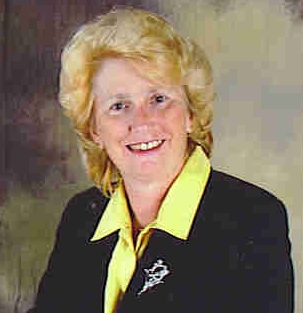
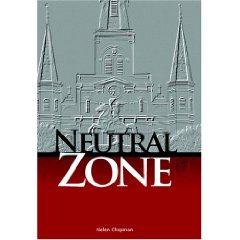
Helen Chapman I’m old enough to have learned cursive with a fountain pen, and never got over it. Oh, ball points and gel pens are okay. But nothing comes close to the look and feel of a good, real pen. A good pen is my best friend in court, taking notes for the boss, and handling exhibits between attorneys and the court. My stories always start in longhand, usually while sitting in the courtroom awaiting the judge’s verdict. Yes, I do the majority of writing on the computer, but I fear I can’t edit there. I still have to print out the manuscript, then go at it with a pen. The Wing Sung burgundy is my newest pen, my first from His Nibs, but it definitely won’t be my last. Now I just have to worry about the boss, or a client making off with it. Many of the stories I write are about serial killers, and criminals in general. Please rest assured that horrible, mutilating scenes are just my own way of getting things out of my system, so I don’t do it for real. I also have never knowingly associated with any real criminals, other than the few my boss represents. And as my disclaimer in all my stories says, all identities have been changed to protect the innocent, and the stupid. Don’t sue me. I don’t have much anyway.
A K M Adam A K M Adam is a biblical scholar, theologian,
author, priest, technologist and blogger. He is Visiting Professor of New
Testament at Duke Divinity School. He is a writer, speaker, and activist
who simultaneously engages the worlds of theology and technology on
topics including postmodern philosophy, hermeneutics, education and Although I've been involved with digital technology since the
late seventies, I have long relished the sensual satisfaction of writing and
drawing with rich, wet ink on paper whose texture you can feel through a pen's
nib. When I write an essay, a book or a sermon, I very frequently need to set my
trusty Apple laptop aside and start drafting outlines, notes, and arguments on
legal pads (or note cards or my pocket Moleskin). The kinetic engagement of more
of my muscles, of my mind's capacity to shape letters more or less well,
inspires more variable, more colorful, and usually more fluent and convincing
prose to fill my legal pages. Typing at my computer -- much as I love it
-- lacks the multidimensional aesthetic stimulation that handwriting with my
pens provides, and I write better when more of my faculties contribute to the
writing. The author's most recent book is Faithful Interpretation.
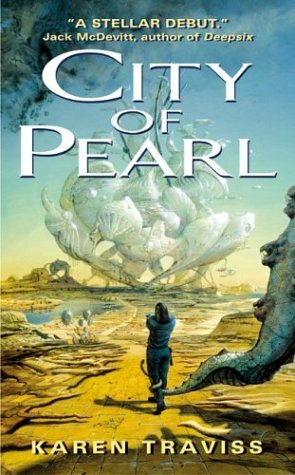
Karen Traviss Karen Traviss is a New York Times bestselling novelist who's been collecting pens since childhood. She lives in Wiltshire, England, and has a weakness for Sheaffer Tuckaways, superflex nibs, and Yard-O-Led pencils. Pens - real pens, that is, with proper nibs and honest, messy ink - are the antidote to a high-tech writers' life. I'll be the first to admit that the PC and word processing software make life much easier for writers: whoever developed the cut-and-paste function deserves a Nobel prize for their contribution to writers' sanity. And have you ever had to check through 600 pages of typed copy to find and replace every use of a certain word? When you're knocking out 150,000 words, electronics wins every time. I have writer friends who swear by doing drafts in longhand because it stops them hammering out a stream of consciousness. They feel the keyboard is just to fast to allow the self-editing process that's inherent in manual writing to take place. I'm not sure I could work that way: I'd never keep up with my schedule, for a start, and I need to see words on a screen in an impersonal typeface. That helps me dissociate from the intensely personal act of writing and see the work as a book, as the reader will see it. But the more I use computers, the more comfort (in every sense of the word) I find in pens, especially vintage ones. I do all my outlining, planning and revision on paper. After a brief flirtation with three-by-five cards, fiction planning software and scraping pointed sticks in the dirt, I now use Clairefontaine plain A5 notebooks and a real pen. Now, that might sound as if I have just the one instrument. I lied. I'm too embarrassed to reveal just how many fountain pens I have, but I can honestly say the collection hasn't topped three figures - yet. Right now, I'm using a 90 year old Waterman eyedropper, a Doric with an adjustable nib, a tiny 1920s gold-filled Eversharp ladies' pen, a Mottishawed Namiki VP, and one of His Nibs' extra-fine nibbed Hero pens for line-editing and marking proofs. No, you're right - nobody needs to carry five fountain pens around with them, but this isn't about need. It's about ritual. Applying a beautiful ink to fine paper with a flexible nib changes you and the way you think. It slows you down. It eases those neck twinges you get from hours at a keyboard. It makes you think of the form of words and ideas, how they look as well as how they sound. And when you handle a very old pen, you can't avoid wondering what it wrote before it came into your possession. Let's face it - lugging a laptop into your favourite coffee shop just isn't the same as sitting down to a steaming latte and taking out pen and paper to indulge in some thinking time. Fountain pens are civilized. In fifty, maybe a hundred years' time, someone else will be making use of my pens and finding as much pleasure in them as I did: but the software will be long gone.
Karen Traviss' website and her Novels page
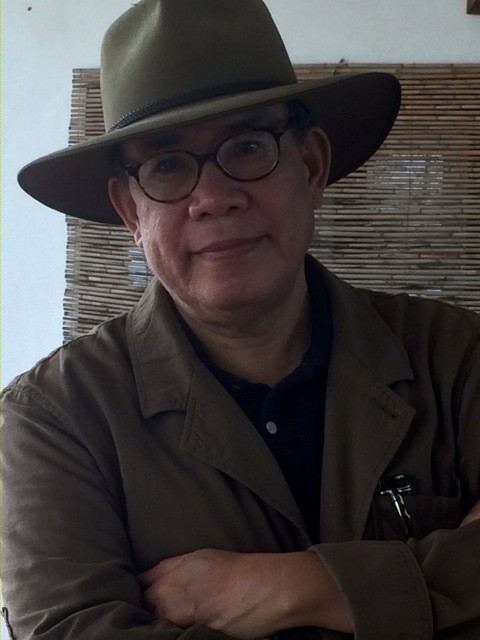
Mike Toot Mike Toot has written or edited fourteen books about computer software, performed Shakespeare, argued cases in front of state Supreme Court judges, and competed in offshore sailing events. He currently resides in Seattle with his wife and Maine Coon cat in a fully-renovated 1908 Craftsman house. He loves to do absolutely nothing on weekends. There's something about computer technology that just doesn't lend
itself to love. I write about computers and software for a living, and I never
come home and croon a sonnet to my keyboard or wax poetic about a
Maya North
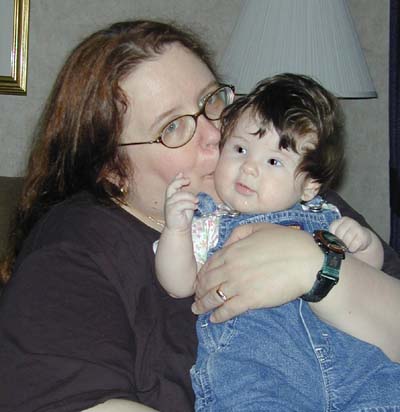
I got hooked on fountain pens when my daughter
gave me the incredible gift of a granddaughter, the magnificent Sophia
(picture above). I decided that there was nothing for it but to write
journals for her--one for her as a little girl, another one (maybe two) for
when she was old enough to hear family history as I remember it. That's what
is lost to us--who our people were. Our grandparents are so often nothing
more than ciphers to us and as for great-grands and more--ephemeral bits of
smoke and drift. And of course, since I am writing them in these magnificent
Italian leather-bound journals, nothing would do but to write them using
fountain pens. So far, my favorite is an inexpensive Sheaffer recommended by
His Nibs himself--writes as smooth as butter and I have that great copper
color in it right now.
I've been writing for years, mostly on computers
because I can type as fast as I think. The first completed opus was a sci-fantasy
work begun at age 20 which will probably never see the light of day.
Currently I'm working on two things at once (it's that attention-span thing).
One is a supermarket romance I intend to publish under a pseudonym. I have it
being reviewed by two friends who are not great fans of romances and they have
told me that if I leave them hanging they will hunt me down and make me finish
it. This is a good sign. The other I have just begun is a memoir about my
brother who died of AIDS at age 35--some of his life, some of mine. Not sure
where it's going, but I'm pretty sure it's going under a pseudonym also with
lots of details changed as my father is still living and we've finally
achieved peace.
Here is an preliminary, unedited excerpt from
that, with some of the details changed because, well, you know...
Continued here click here if you'd like to email Maya
S. L. Viehl
I have been in love with
fountain pens since my grandmother gave me my first Parker back in high school
(about the same time the wheel was invented.) The flow of the ink and the feel
of the nib against paper made me feel like my hand was dancing as I wrote. All
the writers I admired had written their stories with quills they dipped in ink,
so I felt an immediate connection to the past as well. Only I didn't have to go
catch a goose and pluck it first if I wanted to write a story.
Chandler McGrew
Like most authors today
(excluding Grisham who may be some kind of mutant
from a writer's planet) I write using a PC. When you're what editors call an
'organic writer' like myself, however, and too lazy to do outlines, you have
to slog through numerous drafts. I accomplish that with paper and pen,
and a fountain pen is my preferred weapon. Unlike ballpoints, fountain pens are as individualistic as their owners. I have pens as ancient as something just over one hundred years (an eyedrop fill Waterman) to modern marvels from HisNibs.com like my new Monteverde (which is swiftly becoming my favorite) and each of them has it's own feel and writing characteristics. They are a joy to use and a joy to own for all their temperament. Fountain pen ownership is almost like pet ownership. Mistreat a ballpoint and throw it away. Mistreat a fountain pen and it will bite.
Bill Rogers I'm a would-be writer. My biography is easy to tell, since I haven't
done much that would be of any interest except to myself. I'm a
State environmental enforcement guy working in a rural area, checking
out what industry we have. Continued here |
|
Ordering Procedures & Returns International customers, please note, we will not falsify shipping documents Please send your order and shipping address (along with any questions) to:
orders@hisnibs.com We will email you back with your order total (PA residents please add 6% sales tax) Credit cards, for the quickest fulfillment of your order, are accepted through PayPal, a secure site allowing you to use your credit card without us even seeing the information. If you'd like to make use of this credit card service, please let us know when you email your order and address, and we'll email you the appropriate Request for Payment, and instructions for the simple payment procedure (you don't need to join PayPal to use it).
If you would like us process your credit card directly instead, then please email us: 1. Card # (dividing this number in two, between two emails, will
ensure security) If you'd rather pay by money order or check, kindly make payable to: His Nibs.com We ship via
insured Priority Mail
Warranties and returns If an item proves to be defective, in most cases the manufacturer's warranty will apply. However, please email us first so that we can determine the easiest way to resolve the problem to your satisfaction. In the case of fountain pens -- which are a bit more individualistic than other writing instruments -- what may at first appear to be a defect (hard starting or poor flow for example), can in almost all cases be resolved with a few simple 'tweaks' to the nib, which we'll be happy to guide you through or perhaps suggest returning to us for adjustment. Should you wish to return a non-defective
item within 3 days of receipt because it doesn't suit you for some reason, again
please email us and we'll arrange an exchange, credit or refund (minus any
shipping/insurance charges), if the item is returned in an 'as new' condition.
If you've dipped a fountain pen to try its writing characteristics, kindly clean
off any ink residue prior to shipping -- to save us both a nasty surprise
We want you to be happy with your purchase from HisNibs.com and hope to have you join the ranks of our many long-term, repeat customers!
Revised: August 19th, 2023
|